
On telling the truth
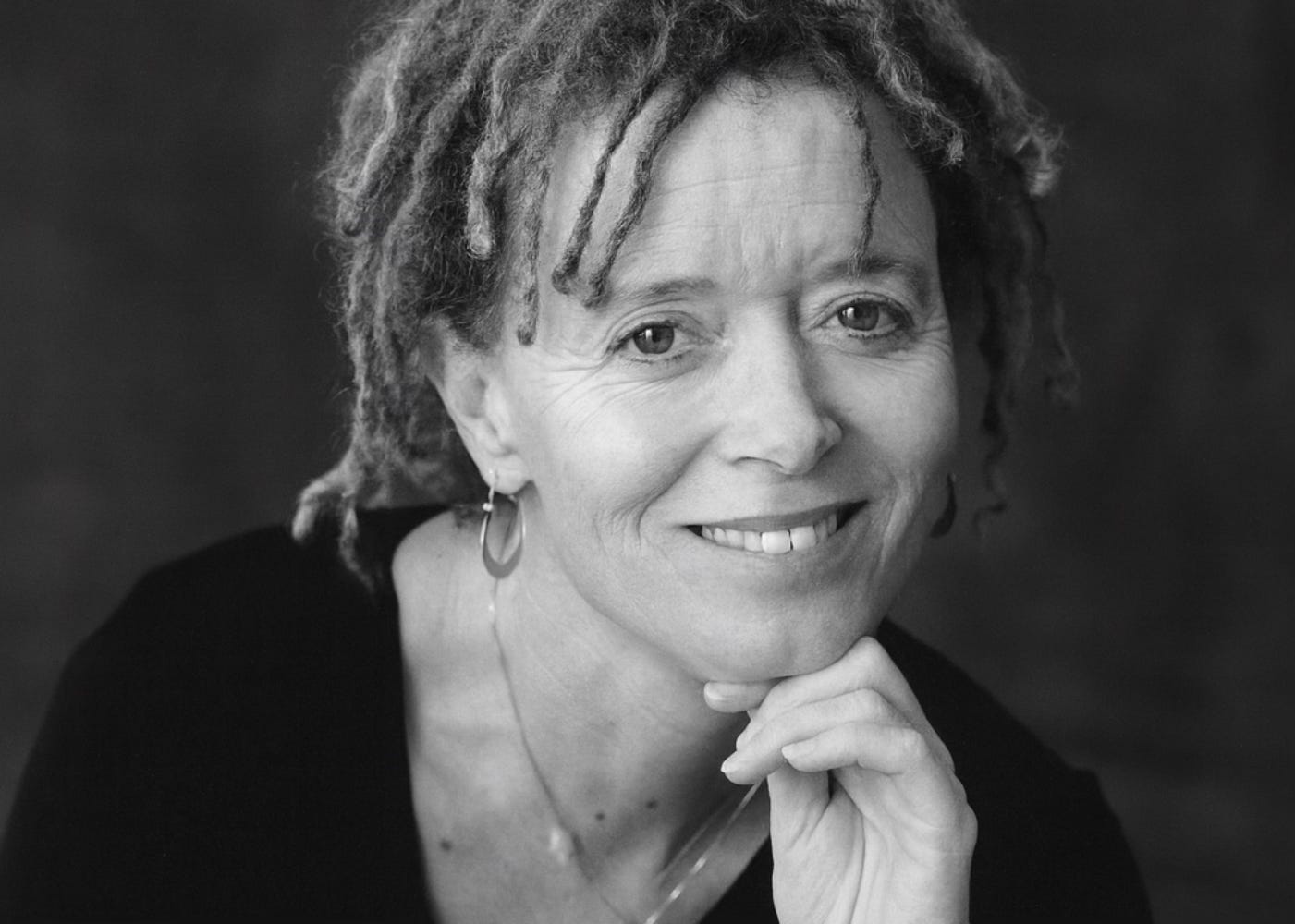
ANNE LAMOTT | “Good writing is about telling the truth.”
Dear Faithful Reader,
In my coaching program, Writing Mastery Mentorship, I teach something I call Writer’s Mantras — keys to maintaining the mindset it takes to persevere through self-doubt and distraction and get your book written. Mantra #7 is this:
“When you write, tell the truth.”
What does that mean, to tell the truth? If I tell you it’s 5:20 a.m., that I’m wearing dark gray socks and sitting in a blue chair in the northwest corner of my home office, am I doing my job as a writer? After all those things are true.
But so what?
Those things are true, but are they the truth?
“Good writing is about telling the truth,” as Anne Lamott puts it, may be one of those rare English sentences where the most important word in it is “the.” What is THE truth?
There are truths and truths: things that are factual but don’t mean much, and things that are factual and are freighted with layers of meaning that penetrate down through the earth’s crust and all the way to its deepest molten core.
Which, strictly speaking, isn’t “true” at all, or at least not factual.
If I tell you that when I drift off to sleep at night, one of my last conscious thoughts is of Ana, my companion and love of my life, and of how she both grounds and colors my existence, that is true, but it has nothing to do in point of fact with the earth’s crust and molten core. That’s all metaphorical stuff.
And yet that molten-core part is also true. “Truer than true,” as Dr. Seuss might say.
A court reporter’s job is to write the facts of what was said and by whom. A journalist’s job is to write the facts of what happened: who, what, where, when, and sometimes why.
A novelist’s job, it seems to me (or a parabolicist’s, or an essayist’s, or a children’s book author’s), is to search out and describe those truths that penetrate down through the earth’s crust and all the way to its deepest molten core.
I first learned this when I was eight years old.
That summer I read Fred Gipson’s classic story Old Yeller, and like thousands of other kids, when I got to the part near the end where Travis Coates has to shoot his beloved dog, I cried and cried.
That same summer I also read Born Free, Joy Adamson’s memoir of her experiences in Africa with a lion cub named Elsa. At the very end of that book, the author reports that Elsa died — and I didn’t shed a single tear.
Which kind of freaked my eight-year-old self right out. Why did that real-life death not move me at all, yet the fictional, made-up death in Old Yeller shook me to my bones?
My mom helped me work out the answer: it was the writing.
Adamson reported the death like a journalist. Gipson led us through the death of Yeller and the full weight of what that meant, right down to the earth’s molten core. I tear up even now, thinking about it, the resonant chords that scene stirs — pets of mine who’ve died, people I’ve known who have died, and for that matter, the animals and humans who haven’t died but whom I love the way Travis Coates loved that dog. The tangible substance of devotion and loyalty and the way those truths knit together the fabric of our lives.
The story was a work of fiction; none of it really happened. But it told the truth.
The quote atop this month’s letter comes from the opening paragraph of Anne Lamott’s wonderful book Bird by Bird, which goes like this:
The very first thing I tell my new students on the first day of a workshop is that good writing is about telling the truth. We are a species that needs and wants to understand who we are. Sheep lice do not seem to share this longing, which is one reason they write so very little. But we do. We have so much we want to say and figure out.
Gordon Lish, the writer/editor who sometimes styled himself “Captain Fiction” and championed writers from Ken Kesey (One Flew Over the Cuckoo’s Nest) to Raymond Carver (What We Talk About When We Talk About Love), said something similar:
The secret of good writing is telling the truth.
Ernest Hemingway put it this way:
A writer’s job is to tell the truth.
Perhaps a human being’s job is to live the truth. And if it sometimes seems as though we spend the better part of our lives searching out just what that is, well … it’s well worth the hunt.
My January wish for you:
That you take a few moments every day to consider what truths you are here to live.

About the writer
Anne Lamott is the author of nineteen books, both novels and nonfiction, along with scores of essays and widely read social-media posts. Regardless of the format or topic, every piece of Anne Lamott writing reads pretty much the same way: like you’ve just sat down at a table at the deli, or a park bench, or the back seat of a car on a road trip, and you have found yourself embroiled in a spontaneous, sidesplittingly funny, surprisingly intimate conversation with someone you’ve just met and feel you’ve known your whole life.
Lamott is much beloved by her readers both for her hilarity and for her devastating honesty. As she says:
I try to write the books I would love to come upon, that are honest, concerned with real lives, human hearts, spiritual transformation, families, secrets, wonder, craziness—and that can make me laugh. When I am reading a book like this, I feel rich and profoundly relieved to be in the presence of someone who will share the truth with me, and throw the lights on a little, and I try to write these kinds of books. Books, for me, are medicine.
Part of Lamott’s magnetism comes from her unceasing candor about the inherent messiness of life — including her own, which has, to put it mildly, had its ups and downs.
After penning her first novel, Hard Laughter, a fictionalized account of losing her novelist father to brain cancer, she then lost her best friend to breast cancer. She suffered through years of drug and alcohol addiction (a favorite Annephorism: “trying to reason with an addict is like trying to blow out a light bulb”), then got clean and sober and became a single mom, only to live through her son’s addiction, help him get clean and sober, and then find herself in the role of helping to raise his son, her grandson. (A few days after getting Medicare, she got married for the first time.)
She is hard to pigeonhole.
The New York Times described her as “a feminist C.S. Lewis” and a “lefty guru of optimism.” She is an unabashedly liberal activist devoted to her church — basically, a Presbyterian hippie. (Her grandfather was a Presbyterian missionary; her father taught San Quentin inmates how to write, a tradition Lamott herself has continued.)
Despite her religious convictions she is never preachy, never strident or overbearing. She speaks often and passionately about her faith, even inviting readers to join her for services (at St. Andrews Presbyterian in Marin County) — and this is the same person who once wrote:
I thought such awful thoughts that I cannot even say them out loud because they would make Jesus want to drink gin straight out of the cat dish.
What to me makes Lamott the perfect author-highlight choice for my first Mann’s Search email of the New Year is her conviction that the process of writing and the process of living so closely reflect and resonate with each other — a view I wholeheartedly share.
She is probably best known for the book from which this month’s quote is taken, Bird by Bird: Some Instructions on Writing and Life, which she has described as “a guide to becoming a better writer and improving your life along the way.”
The title comes from a scene out of her childhood. Anne’s older brother, then age ten, was struggling to write a report for school. The assignment had been given out three months earlier and was now due the next day. Anne’s brother hadn’t even started yet and was now near tears at the impossibility of the task before him.
The elder Lamott put his arm around the boy and said, “Bird by bird, buddy. Just take it bird by bird.”
To which I say: Amen.
Recommended Reading
If you’ve never read any Lamott, here are some suggestions for where to dip your toe into the water:
Bird by Bird (1994), her indispensable guide to writing and life.
Traveling Mercies (1999), a memoir of faith and imperfection.
Help, Thanks, Wow (2012), short, soulful meditations on prayer.
Let me know if you read any of these and fall in love!
Is there a book in you, waiting to be written? A story you’ve been wanting to tell, an expertise you need to share? Consider joining our community of writers in my one-year coaching program, Writing Mastery Mentorship.