
On staying heartened
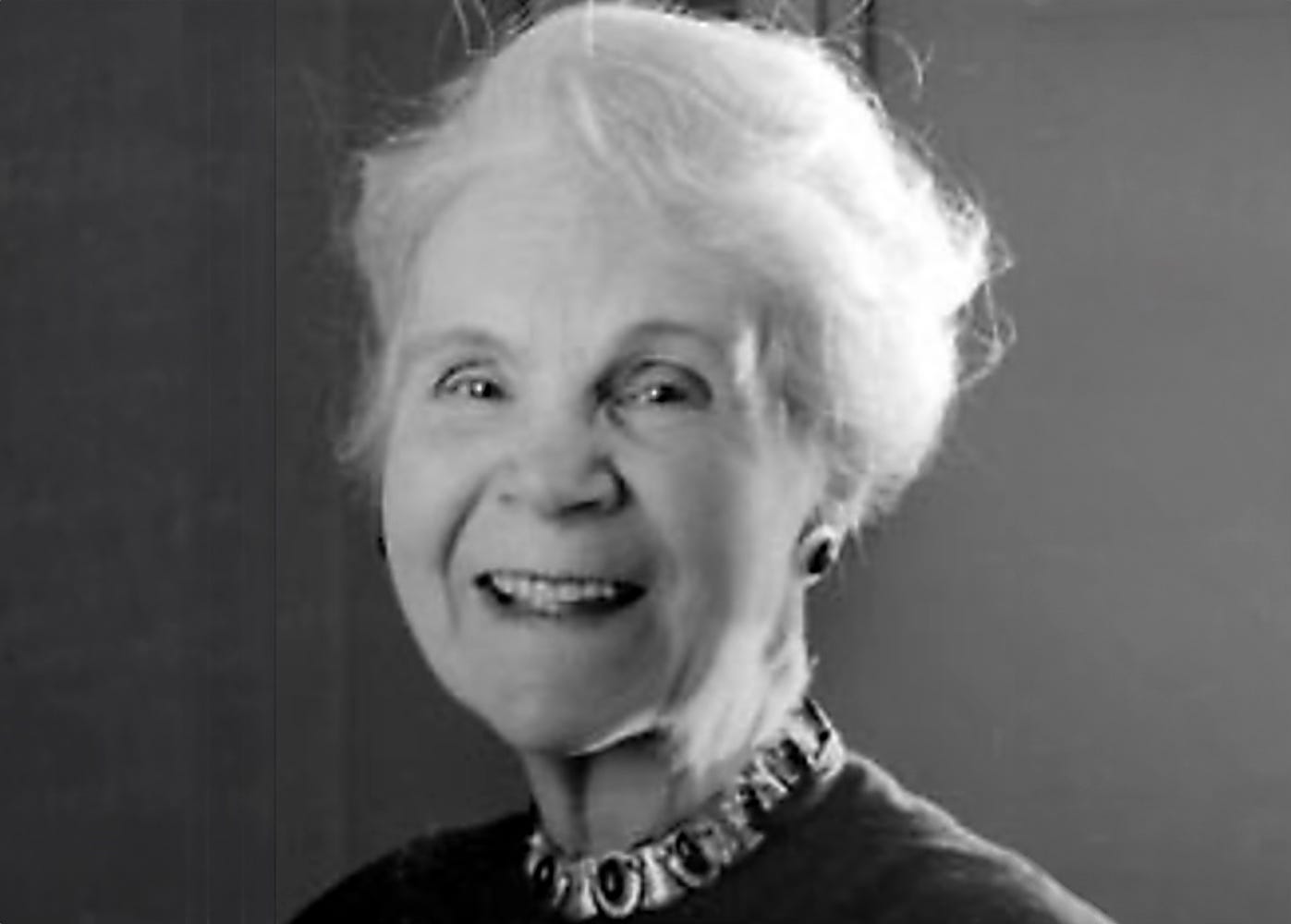
IRMA S. ROMBAUER | “Do not be discouraged.”
Dear Faithful Reader,
There was a time in the life of the Go-Giver books when I felt completely defeated. Here’s how it happened.
When our agent submitted our original manuscript, it was rejected by eight publishers. We took it back, spent a year reworking it, and submitted it again. It was rejected 14 more times.
But that wasn’t the “felt completely defeated” part. My coauthor Bob Burg and I never lost heart, and after our exhaustive rewrite and persistent resubmission, publisher #23 said “Yes,” and we were off to the races. (Wall Street Journal bestseller, translated into 32 languages, over 1 million copies sold, and so on.)
The book did so well our publisher asked for a second parable. Hooray! This time we wouldn’t have to go through that gauntlet of submissions — we already had a contract!
We wrote the book, which our publisher gave the title It’s Not About You. You may have seen it: bright yellow cover, picture of an old-fashioned wooden chair, John Maxwell quote on the roofline.
But then, you also may not have seen it.
Because it was a flop.
The people who bought it and read it loved it. Only not very many people bought it. The book hit the marketplace with a dull thud.
“You win some, you lose some,” I told myself. “No big deal.” It wasn’t until three years later that I realized, I’d been living under a dark cloud for the past three years. The failure had gotten to me.
I had become discouraged, and it was crippling my ability to keep on writing.
Don’t worry, there’s a happy ending here, and I’ll share it with you in a moment, I promise.
First, though, let me tell you what my friend Nido Qubein says.
Nido arrived in America at the age of 17 with fifty bucks in his pocket and about fifty English words in his vocabulary. Today he is president of one of the country’s fast-growing universities, one of the nation’s most sought-after public speakers, and one of its most active philanthropists.
Right now I’m writing Nido’s memoir, and I just finished the chapter where his first business suffers a major disaster. Here’s what he says about it:
It’s all right to be disappointed.
It’s never all right to be discouraged.
The word “courage” comes from the Latin “cor” for heart (as do its cousins coronary, cardiac, cordial, and accord).
To be discouraged is to lose heart — as opposed to being disappointed, which simply means to become unsettled, off point, like when you miss an appointment.
So, I get Nido’s point. Yet I cannot quite follow his advice. I think it’s the word “never.” I would say it this way:
It’s all right to feel discouraged — just not all right to stay discouraged.
Discouragement is inevitable. When Buddha said, “Life is suffering,” he wasn’t just blowing incense. The world can be a brutal place, rife with upsets, losses, and catastrophes. There is not a soul alive who doesn’t face daunting turns in the path. How can you avoid the occasional disheartenment?
But here’s why it’s not okay to stay disheartened: if your heart isn’t in whatever it is you’re doing, then you’ve already given up. To stay discouraged is to set foot on the path of defeat.
Your heart may skip a beat or two, just don’t let it stop altogether.
Which brings us to Irma Rombauer.
The year is 1930. The country is plunging into the depths of the Great Depression. A severe drought has hit the Midwest, the start of the devastating Dust Bowl years. And Irma Rombauer’s husband, a Missouri attorney named Edgar, has just committed suicide.
As a way of coping with her grief, Irma starts writing down her recipes and thoughts about cooking, takes what savings she has, and publishes them herself.
She doesn’t call her collection Cooking in the Depression Years, or Cooking for Survival. No, she has the audacity to call it The Joy of Cooking.
It becomes the most popular cookbook of all time.
In this month’s quote, “Do not be discouraged,” Rombauer happened to be talking about the practice of making fruit-filled pies. But she might as easily have been talking about her life. Financial collapse? Spousal suicide? National ruination?
You may be discouraged, but do not stay discouraged.
So my question for you (actually three questions):
When in your life have you experienced a sense of defeat? and how long did that sense last? and were you able to climb out of it? (If you trust me enough to share this, REPLY HERE — I would love to read your answer!)
Now, about that parable of ours, the one that flopped:
Once I realized just how discouraged I’d become and how paralyzed this had left me, I took a hard look at the book. Talked with Bob about it.
We decided the problem was the title. Perhaps people saw It’s Not About You and figured, “Hey, if it’s not about me, I guess there’s no point in my reading it!”
Or perhaps they just didn’t know what the heck that meant.
We went to our publisher and asked if we could change the title and relaunch the book from scratch.
Now, relaunching an existing book with a completely different title and identity, especially a book that didn’t do that well in the first place, is an awfully big ask. Huge investment. Huge risk. Publishers just don’t do that.
But ours did.
They agreed with us, made the investment, and took the risk. We rewrote the text slightly and republished the book with a brand new cover and brand new title.
Reborn as The Go-Giver Leader, it has done very nicely indeed.
And you know what? If it hadn’t worked, that would have been okay, too. We would have tried something. I would’ve been able to pick up and move on.
But here’s what I know for sure: If I hadn’t identified just how deeply defeated I felt and made the decision not to stay that way, the relaunch would’ve never happened, and The Go-Giver Leader would not exist.
So how exactly do you overcome whatever reversals you face? What is the strategy for turning your loss into a win? I don’t know. The details of your situation will differ from mine. What I do know is this: the right strategy exists, and you have the capacity to find it.
However, and this is the critical part:
The solution will not present itself, or if it does you won’t be able to see it clearly, so long as you still dwell in a state of defeat.
Faced with a setback — a flop, a grievous loss, a betrayal, a collapsing nation — be compassionate with yourself. Feel the pain of desolation; it’s the sting that tells you you’re alive.
And then remind yourself that you are alive.
My July wish for you:
That you take a little time every day to acknowledge something that has made you feel deeply discouraged … then take a breath, say “Thank you,” and reclaim your joy.

About the writer
Irma Louise von Starkloff led a charmed life. Her father, a highly respected German immigrant named Hugo von Starkloff, was a successful physician who served in the U.S. Army as a surgeon during the Civil War. Returning to civilian life, Dr. Starkloff became a prominent St. Louis politician and civic leader.
Born in St. Louis in 1877, Hugo’s daughter Irma received an education that included classes in fine arts at St. Louis’s Washington University and studies in Lausanne, Switzerland during her father’s five-year stint as U.S. Consul to Bremen.
The Starkloffs (they had by now dropped the “von”) lived in a stately mansion in St. Louis’s historic Compton Heights neighborhood. On frequent trips to visit relatives in nearby Indianapolis, Irma befriended the young novelist Booth Tarkington (later a Pulitzer-winner), who briefly courted her. Instead, in 1899 she married a young St. Louis attorney named Edgar Rombauer, whose father was a prominent judge.
Living at the center of St. Louis society, Irma’s sparkling personality made her the quintessential upper-crust hostess. According to her biographer, Anne Mendelson:
“No one could be long in her diminutive presence without sensing an air of concentrated intelligence, strength, self-possession, charm, and dignity that seemed to sweep all before it — except that she knew how to soften it with disarming feminine self-deprecation and sheer fun.”
As the Roaring Twenties roared on, Irma was in her element and at the height of her powers.
And it all came crashing down in late October, 1929.
Like every other city in America, the social fabric of St. Louis was decimated by the stock market crash and its aftermath. The Rombauers’ substantial life savings, mostly in stocks, were gutted and left next to worthless, leaving the family with about $6,000 in cash, which would sustain them for a while but not forever.
And then, three months later, Edgar killed himself.
At 52, Irma was single and shattered, both emotionally and financially.
In truth, Edgar’s troubles long predated the nation’s woes. He’d been plagued by periodic nervous breakdowns. When his and Irma’s first child, Roland, died before his first birthday in 1901, Edgar fell apart, and his stretches of solidity were never wholly reliable.
One gets the sense that between the parties and entertainments, Irma was the glue that held the family together.
His fragile temperament notwithstanding, Edgar was the love of Irma’s life, and her own despondency at his sudden death must have been profound. Husband, gone. Affluence, auf wiedersehen. Parties, events, glitz and glitter: poof.
What on earth was she to do now?
She decided, of course, to write a cookbook.
Exactly why is still a bit of a mystery. While legendary for her entertaining, Edgar Rombauer’s widow was far from renowned for any mastery of cooking. Her family, according to some sources, was “puzzled” by her plan. As her daughter Marion later recalled,
“Mother’s early housekeeping days gave little evidence of culinary prowess.”
A relative of Edgar’s put it a bit more bluntly:
“Worst idea I’ve ever heard of … Irma’s a TERRIBLE cook.”
Maybe so — but she was smart. Another St. Louisan, Gladys Taussig Lang, had just published an overpriced ($5) little book titled Choice Menus for Luncheons and Dinners. Thumbing its pages, Irma found a parade of decadent dishes calling for expensive ingredients — wildly inappropriate for a city adrift in the Great Depression. People couldn’t afford fancy ingredients or kitchen gadgetry. Many could barely afford groceries.
What people needed, she understood, was a reliable source of practical kitchen guidance. They didn’t need hoity-toity recipes; they needed a survival manual.
More than that, they needed inspiration and companionship.
They needed hope.
And this was the genius of Joy: along with being a no-nonsense kitchen resource, it would provide a shell-shocked populace of the 1930s with a fearless, undaunted, reassuring voice.
It would show people a pathway out of disheartenment.
Scouring her sphere of acquaintances, she collected recipes from friends and their families, tested them out meticulously, tweaked, tested again, tweaked again. Finally satisfied, she wrote up some 400 pages of recipes sprinkled throughout with witty observations on cooking, hosting, and homemaking.
This wasn’t just a cookbook; it was a party on paper.
She chose a title that would convey the idea that even in the midst of national ruination, everyday cooking could be a source of pleasure and not just a chore. The book’s subtitle captured the book’s mood: A Compilation of Reliable Recipes with a Casual Culinary Chat.
Manuscript in hand, Rombauer approached a local printing company who had never produced a book before (they printed the labels for Listerine bottles). They said they could deliver at the cost of a buck per a copy.
Confident she could sell them for $3, she took half the family savings and ordered a print run of 3,000 copies, insisting on a washable cover. She commissioned her 28-year-old daughter Marion, an art teacher, to design the cover, a block print depicting St. Martha of Bethany, the patron saint of cooking, slaying the dragon of kitchen drudgery.
And The Joy of Cooking was born.
Fun fact: that first self-published edition of Joy was published in 1931, smack in the midst of Prohibition — and its opening section of recipes is boldly titled “Cocktails.” (The very first recipe for “Gin Cocktail”: 2 parts gin, 2 parts orange juice, 1 part lemon juice, and a few drops of bitters.) Here’s how that section begins:
“Most cocktails containing liquor are made today with gin and ingenuity. In brief, take an ample supply of the former and use your imagination. For the benefit of a minority, it is courteous to serve chilled fruit juice in addition to cocktails made with liquor.”
That, my friends, is Irma Rombauer. (It should be noted here that Irma herself was not much of a drinker; just an excellent hostess.)
The author managed to get copies of her new book placed in bookstores and gift shops as far away as Michigan and Chicago; she landed a feature article in the St. Louis paper; she sold copies door to door.
By that summer she’d sold well more than half her inventory — yet despite the positive reviews and brisk sales, she could not find a publisher willing to take it on.
And that would have been that.
Except that one of those 3,000 copies landed in the Indianapolis kitchen of a cousin, Ina Vonnegut (the wife of one Anton Vonnegut, who was, yes, first cousin once removed of a certain ten-year-old kid named Kurt, who would grow up to become a helluva novelist).
And that week Ina happened to have a dinner guest named David Chambers, who happened to be president of a publisher called Bobbs-Merrill, publishers of The Wizard of Oz, the Raggedy Ann books, and, a decade later, Ayn Rand’s breakthrough novel The Fountainhead. … who happened to be in the market for a cookbook.
At the time, there were only two nationally known cookbooks in print: the venerable White House Cookbookand Fannie Farmer’s Victorian-era Boston Cooking-School Cookbook. Bobbs-Merrill, though they’d never before published a cookbook, was hankering to capture the market with a more contemporary approach.
A few days later, three gentlemen from Bobbs-Merrill showed up on Irma’s doorstep. Could they come in? And could they buy her book?
Bobbs-Merrill put out the first commercial edition of Joy in 1936. Within six months it had sold over 6,000 copies, more than doubling the book’s 1931 print run, and eventually sold over 50,000 copies.
In subsequent editions, the book grew and evolved.
In the 1936 edition itself, Irma had already introduced her first major revision and innovation: instead of the traditional method of listing all ingredients in a separate table, she’d rewritten the entire book with her now-famous “Action Method,” introducing each new ingredient in bold text at the point in the narrative where the reader would actually use it.
The 1943 war-time edition introduced a “Quick Cooking” section, with innovations including canned goods, frozen foods, and such new-fangled ingredients as condensed soup and Jell-O. This one sold over 600,000 copies, far surpassing its chief rival, Fannie Farmer.
For the 1951 edition Rombauer’s daughter and collaborator Marion Becker now became an official coauthor, and with Marion’s passion for healthful eating the book began to emphasize fresh produce and organic foods.
With successive editions, the family mantle continued to pass: The 1963 edition (which dropped the “The” from the title), published a year after Irma’s death, was completely Marion’s. For the 1975 edition, Marion’s son Ethan came on board, and for the 2019, Ethan’s son John and his wife Megan.
Now approaching its 100th anniversary, the book has grown from about 500 recipes to well over 4,000.
The story of Joy of Cooking, however, is not a fairy tale but a cautionary tale, and its path was not without further heartbreak.
The Rombauer family’s relationship with their publisher was fraught from the start, and it grew only worse over the decades. Even in its first 1936 edition, Bobbs-Merrill wanted to cut Irma’s anecdotes and witty comments; Irma fought tooth and nail, and they remained.
Rombauer’s contract, though, was worded in a way that conveyed copyright of both the new edition and her original self-published edition to the publisher. Rombauer, having no publishing experience, went along with it, a decision that plagued her for years, fueling decades of acrimony, misery, and power struggles over content and format.
(Note to new authors: What you sell a publisher is a set of strictly defined rights to print and distribute your work; never the actual copyright. You always, always retain copyright.)
Rombauer was eventually able to renegotiate her contract, inserting a clause that gave Marion full control over content, and the Rombauer line has retained its grip on the book. Bobbs-Merrill’s fortunes declined and it was eventually absorbed by Macmillan, whose imprint Scribner is Joy’s publisher today.
And Irma lived to fully enjoy her status as the First Lady of American Cooking.
On a trip to Europe in the 1950s she met Julia Child, an ardent fan of Rombauer’s book, calling it:
“The one book of all cookbooks in English that I would have on my shelf, if I could have but one.”
Cecily Brownstone, the most widely syndicated food writer of the fifties, sixties, seventies, and eighties, dubbed it:
“… the best loved cookbook to come out of these United States.”
Craig Claiborne hailed it as:
“… the finest basic cookbook available … a masterpiece of clarity.”
And Rombauer reveled in the accolades, now hostess of a coast-to-coast party that has lasted for generations. Here’s how she put it herself, as reported in Anne Mendelson’s excellent biography, Stand Facing the Stove: The Story of the Women Who Gave America The Joy of Cooking:
“My daughter says that when my book is praised I purr like a cat. Perhaps I do. I can’t help it for I am a fortunate woman.”
True enough — though to be fair to Irma, it was a fortune pried from the jaws of defeat.
As of today, Joy of Cooking has sold over 26 million copies and is widely regarded the most popular cookbook ever published.
Not bad, for a debut effort, self-published on a shoestring and printed by a company whose day job was printing mouthwash labels.
Recommended Reading
If you’ve never Rombauer’s history-making book, I’d suggested starting with this reproduction of the original 1931 edition:
The Joy of Cooking Facsimile Edition (1931), the original Rombauer.
Also the excellent biography Stand Facing the Stove: The Story of the Women Who Gave America The Joy of Cooking (1996) by Anne Mendelson.
Let me know if you read any of these and fall in love!
Is there a book in you, waiting to be written? A story you’ve been wanting to tell, an expertise you need to share? Consider joining our community of writers in my one-year coaching program, Writing Mastery Mentorship.