
On listening
RACHEL CARSON | “The discipline of the writer is to learn to be still and listen to what his subject has to tell him.”
Dear Faithful Reader,
There’s a line I often use when talking about the writer’s craft: “All writing is personal.” No matter what you’re writing about, whether it’s fiction or nonfiction, a parable or a memoir, a how-to book or thriller, at some level what you’re writing about is you. Because all writing — when it’s good, when it’s authentic, when it’s strong — taps into the well of your own life experience, which is as distinct as a fingerprint.
All writing is personal —which makes it all the more ironic that when you write, you are not the boss.
The story is the boss.
Good writing is a paradox in process: you have to be 100 percent true to yourself, yet at the same time be able to separate yourself 100 percent from what comes off the end of your pen or the dance of your fingertips on the keyboard. Because the story isn’t you. The story is the story.
Your job, as Rachel Carson points out, is to pay attention. To be a good listener.
Living a life is like that, too.
Yes, you are in the driver’s seat of your life. Yet at the same time, there is a path pulling you onward, an itinerary that often takes twists and turns that you could never have predicted — and would do well not to fight against.
All the best things in my life have appeared without being the result of my plan or direction. I was planning on being a screenwriter when Bob Burg came along and asked me to write a book with him. (“Bob Burg ruined my career,” as I am prone to joke in interviews.) The appearance of Ana in my life, that best of all best things that has ever happened to me, was a complete and utter surprise.
It’s a good thing I’m not in charge. It’s challenging enough to listen carefully, to pay attention, and do my best to follow the path as it reveals itself through the mists of circumstance.
A life well lived is that life into which you hurl yourself, a life you commit to and involve yourself in with all you’ve got to give — despite the fact, or perhaps because of the fact, that it never ceases to surprises and turns in the road you’d never have seen coming.
My May wish for you:
That you spend time every day being still and listening to what your life has to tell you.

About the writer
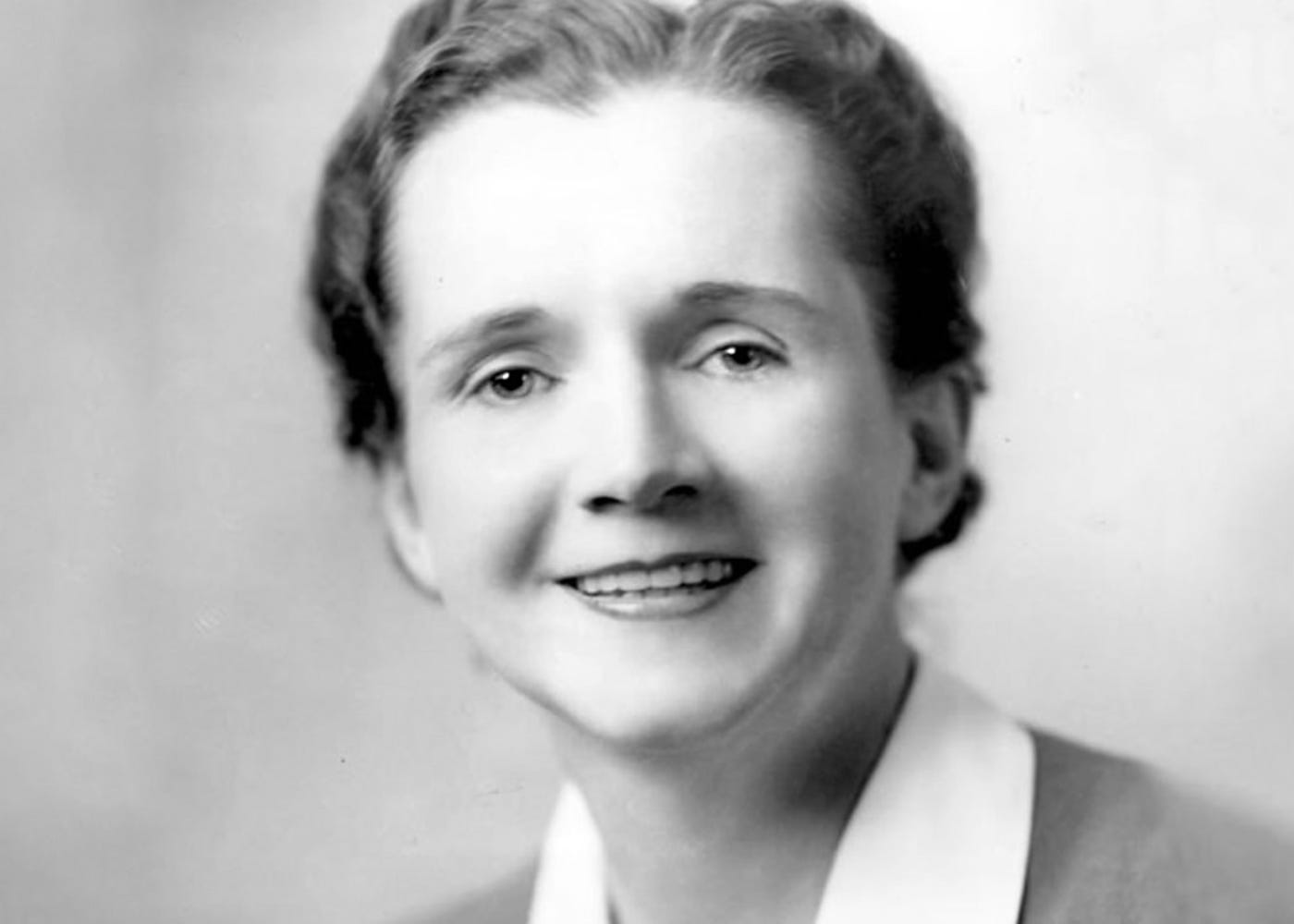
Rachel Carson is of course a household name, widely regarded as the founder and patron saint of the environmentalist movement. Her groundbreaking book Silent Spring, prompted passage of the Clean Air Act, Clean Water Act, and Endangered Species Act, and led directly to the creation of the Environmental Protection Agency.
Yet, while it was clearly her most famous work, it was also her last, apex and epilogue to a long and distinguished career writing about nature, wildlife, and especially the sea.
The lyrical, at times almost hypnotic quality of her prose led one historian to describe her as “the scientist poet of the sea,” a truth ably reflected in a passage from her first published work, an article in Atlantic Monthly entitled “Undersea”:
Who knows the ocean? Neither you nor I, with our earth-bound senses, know the foam and surge of the tide that beats over the crab hiding under the seaweed of his tide pool home; or the lilt of the long, slow swells of mid-ocean, where shoals of wandering fish prey and are preyed upon, and the dolphin breaks the waves to breathe the upper atmosphere. Nor can we know the vicissitudes of life on the ocean floor, where the sunlight, filtering through a hundred feet of water, makes but a fleeting bluish twilight, in which dwell sponge and mollusk and starfish and coral, where swarms of diminutive fish twinkle through the dusk like a silver rain of meteors, and eels lie in wait among the rocks. Even less is it given to man to descend those six incomprehensible miles into the recesses of the abyss, where reign utter silence and unvarying cold and eternal night.
The quote atop this email is drawn from a letter Carson wrote to friend and fellow nature writer Paul Brooks. (It was Brooks, in fact, who suggested the title Silent Spring.) The line comes at the end of a paragraph and is worth quoting at greater length:
The writer must never attempt to impose himself upon his subject. He must not try to mold it according to what he believes his readers or editors want to read. His initial task is to come to know his subject intimately, to understand its every aspect, to let it fill his mind. Then at some turning point the subject takes command and the true act of creation begins … The discipline of the writer is to learn to be still and listen to what his subject has to tell him.
Carson knew how to be still and listen, and in doing so, she changed the world.
Recommended Reading
If you’ve never read any Rachel Carson, here are some suggestions for where to dip your toe into the water:
Silent Spring (1962), the book that changed environmental policy forever.
The Sea Around Us (1951), her gorgeous, lyrical portrait of the oceans.
The Sense of Wonder (1965, posthumously published in 1998), reflections on nature’s spiritual power.
Let me know if you read any of these and fall in love!
Is there a book in you, waiting to be written? A story you’ve been wanting to tell, an expertise you need to share? Consider joining our community of writers in my one-year coaching program, Writing Mastery Mentorship.